AI-Enhanced Sextortion: How to Protect Your Children from 2026’s Most Dangerous Online Threat
As we navigate the middle of August 2026, a chilling new trend has dominated safety headlines. On August 18, 2026, the FBI and Tennessee Bureau of Investigation (TBI) issued an urgent national warning regarding a surge in “AI-enhanced sextortion” targeting minors. This is not just a digital nuisance; it is a sophisticated, criminal evolution of online grooming that has already resulted in $13 million in reported damages this year alone.
For parents, the challenge has moved beyond monitoring who your children talk to. In 2026, predators are using generative AI to create realistic personas, clone voices, and even manipulate innocent photos into explicit material to extort children. Protecting your family in this environment requires a proactive, tech-enabled strategy.
The 2026 Sextortion Crisis: A New Level of Sophistication
The term “sextortion” traditionally referred to a predator coercing a victim into sending explicit images and then using them for blackmail. In 2026, the game has changed. Criminal organizations, such as the group recently identified by the FBI as “764,” are specifically targeting vulnerable children through gaming platforms and social media.
The Rise of AI Manipulation
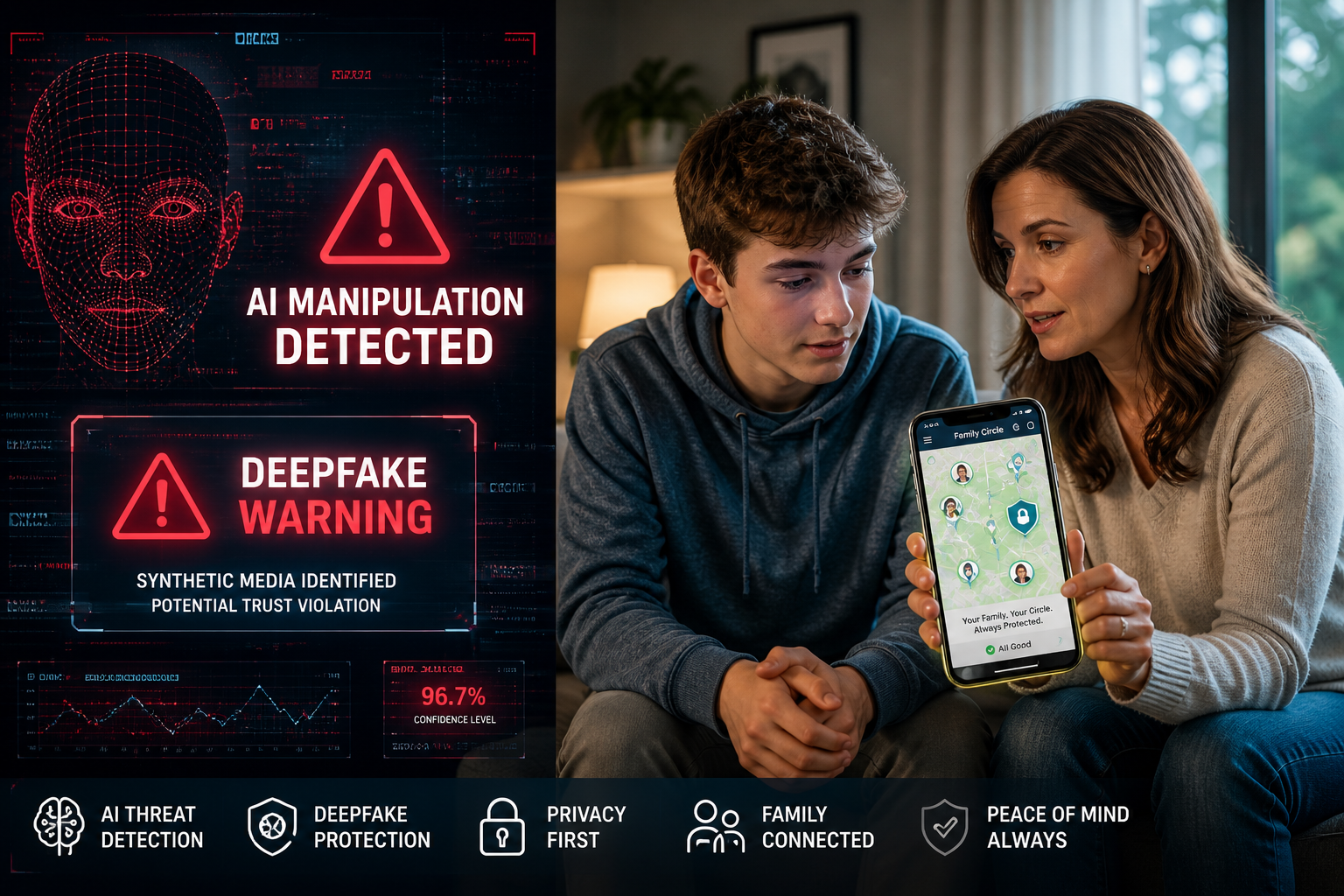
What makes the 2026 threat unique is that a predator no longer needs an original explicit photo to start the extortion. Using “deepfake” technology, they can take a child’s public social media profile picture or a “back-to-school” photo and manipulate it into an explicit image. They then threaten the child with the release of this fake material unless their demands are met.
The “Voice Cloning” Hook
Predators are also using AI to clone the voices of authority figures or peers. A child may receive a voice message that sounds exactly like a trusted friend or even a parent, encouraging them to move the conversation to a private, “hidden” messaging app where the exploitation begins.
Building a 2026 Defense Strategy
Protecting your child from these sophisticated threats requires a combination of open communication and high-tech safety tools.
1. The “Digital Permanent Marker” Talk
Education remains the first line of defense. Children must understand that in the era of AI, any image shared online—even a casual selfie—can be weaponized.
- Encourage Reporting: Ensure your child knows that if they are targeted, they are the victim, not the offender. The FBI’s August 18 advisory emphasized that children should never feel at fault for these predatory actions.
- The “Private-Only” Rule: Limit social media sharing to private circles. If a child’s profile is public, it is a data source for AI manipulation.
2. Leveraging Private Safety Networks
To combat the risks of public social platforms, families are increasingly moving their connectivity to private, encrypted family safety app solutions.
A secure student safety app allows a child to stay connected with their parents and trusted friends without exposing their digital identity to the public web. By using these private networks, you ensure that location data and personal photos are protected by bank-level encryption, not left open for scraping by predators.
3. Implementing the One-Tap SOS
In a situation where a child feels threatened or is being coerced, every second of hesitation matters. A dedicated SOS alert app provides a discrete way for a child to call for help. A single tap of the emergency SOS button can instantly notify the entire Family Circle, sharing the child’s real-time location and alerting parents that something is wrong.
How ProtectSmartly Protects Your Family in the AI Era
ProtectSmartly was designed to handle the realities of 2026 safety. Our platform prioritizes privacy and rapid response to ensure your family stays one step ahead of digital predators.
- Family Circles: Create private, invitation-only safety groups where members can share their status and location securely.
- Privacy First: ProtectSmartly belief is that protection should never cost you your privacy. We use end-to-end encryption (coming soon) and never sell or monetize your family’s personal data.
- One-Tap SOS: In a crisis, the emergency SOS feature sends an immediate alert with location sharing to your designated contacts, ensuring help is always a tap away.
2026 Child Digital Safety Checklist
- Audit Social Privacy: Set all of your child’s social media accounts to “Private” and remove strangers from follower lists.
- Test the SOS Button: Ensure your child knows how to trigger an alert on their student safety app.
- Establish a Family Password: Choose a non-digital word to verify identities during suspicious voice calls.
- Monitor for “Hidden” Apps: Regularly check your child’s device for unfamiliar messaging icons often used by predators to move conversations away from monitored platforms.
- Learn the TIDA Protections: Familiarize yourself with the TAKE IT DOWN Act, which requires platforms to remove non-consensual images of minors upon request.
FAQ: Online Sextortion & Safety
Q: Can I really protect my child from deepfakes?
A: You can significantly reduce the risk by keeping their social profiles private and using private family safety app tools instead of public platforms for daily sharing.
Q: What should I do if my child is being extorted?
A: Stop all communication with the predator immediately. Do not pay. Report the incident to the FBI’s Internet Crime Complaint Center (IC3) and use the TIDA provisions to request the removal of any shared images.
Q: Is location sharing safe for kids?
A: Yes, when it is done through a private, encrypted network. Avoid “tagging” locations on public social media, and use a dedicated safety platform that ensures only you and your trusted circle can see their location.
Conclusion: Awareness is Your Family’s Best Shield
The FBI’s August 18 warning is a wake-up call for every modern family. In 2026, online safety is no longer a “set it and forget it” task—it is a continuous commitment to privacy and preparedness. By understanding the new tactics of AI-enhanced predators and utilizing proactive personal safety tools, you can ensure your children enjoy the digital world safely.
Safety is not about fear; it’s about empowerment. Start your family’s safety journey today by moving your connectivity to a secure, private network.
Learn more about how ProtectSmartly protects your family from digital threats.
Explore our Student Safety App features.
Download ProtectSmartly and take a proactive approach to your child’s digital safety.