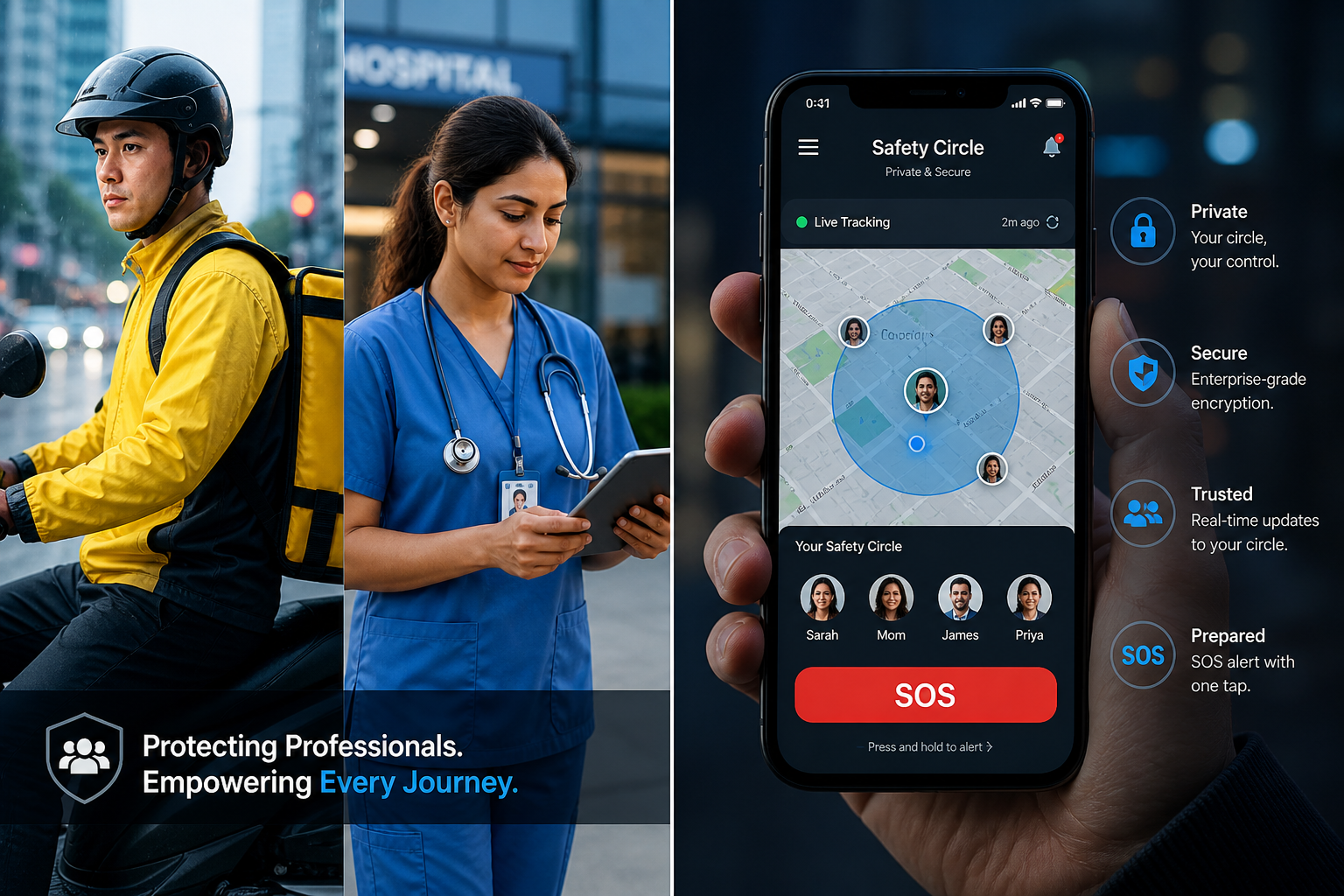
Lone Worker Safety in 2026: The Essential Guide for Healthcare and Delivery Professionals
In the labor market of 2026, the “lone worker” has become the rule rather than the exception. From district nurses and community outreach workers to delivery personnel and rideshare drivers, millions of professionals now perform their critical duties independently, often in unfamiliar or high-risk environments.
As we hit the mid-point of August 2026, industry reports from the National Safety Council (NSC) have highlighted a major shift in workplace safety. We have officially entered the era of “Proactive Tech,” where the goal has moved from simply reporting an incident to identifying high-risk tasks and intervening in real-time. For lone workers, this technology is not just a convenience—it is a lifeline.
The 2026 Lone Worker Landscape: Rising Risks
Despite technological advancements, the risks for mobile workers have intensified. In 2026, increased scrutiny around mobile worker violence and the end of manual check-in monitoring have created a need for more robust, automated safety systems.
Healthcare & Outreach Workers
District nurses and charity volunteers often enter private residences and community spaces where they are vulnerable to aggressive behavior or medical emergencies. In 2026, OSHA compliance for home care administrators now specifically requires the provision of GPS-enabled safety devices to ensure workers can get help quickly.
Delivery & Logistics Personnel
The delivery boom continues in 2026, but so do the risks of theft, vehicle accidents, and environmental hazards. Delivery drivers often work late hours in areas where they may be targeted. The old method of “calling dispatch” is no longer sufficient; workers need an instant, non-verbal way to signal distress.
The Shift to Proactive Safety Technology
The biggest shift in 2026 is the move from “reactive” standalone devices to “complete monitoring” ecosystems.
Automated “Man-Down” & Fall Detection
One of the most critical safety features in 2026 is automatic incident detection. For a lone worker who may be incapacitated by a fall or medical event, the ability to trigger an alert without manual intervention is life-saving. Modern platforms now use built-in mobile sensors to detect sudden impacts or inactivity and automatically trigger an emergency SOS to a designated response team.
Real-Time GPS & Geofencing
Safety in 2026 is about knowing exactly where high-risk tasks are occurring. Using a secure family safety app architecture, organizations can set up “Safe Zones” or geofenced job sites. If a worker leaves a designated area or remains stationary for too long in a high-risk zone, an alert is automatically generated, triggering a wellness check.
Building a Professional Safety Net with ProtectSmartly
ProtectSmartly was designed to handle the realities of modern independence. Whether you are a student walking home or a professional visiting a patient, the platform provides the tools needed for comprehensive personal safety.
1. The One-Tap SOS
In a high-stress confrontation or medical event, there is no time to dial a number. ProtectSmartly’s one-tap SOS feature allows a lone worker to instantly notify their “Safety Circle”—which can include colleagues, supervisors, or trusted family members—with their precise location.
2. Privacy-First Professional Tracking
Safety should never come at the cost of personal data security. ProtectSmartly uses bank-level encryption and a strict “No Data Selling” policy. This ensures that a professional’s movements are visible only to their trusted circle, protecting them from both external threats and digital exploitation.
3. Integrated Emergency Response
By using a dedicated SOS alert app, workers ensure that their distress signal isn’t lost in a sea of texts or emails. The alert is prioritized and sent to multiple people simultaneously, significantly reducing response times.
2026 Lone Worker Safety Checklist
- Perform a Daily Risk Assessment: Identify high-risk visits or locations before you start your shift.
- Enable Automatic Detection: Ensure your student safety app or professional safety device has “man-down” and fall detection active.
- Establish a Communication Protocol: Agree with your supervisor on what constitutes a “Check-in” vs. an “Emergency.”
- Check Your Battery: Never start a lone worker shift with less than 50% battery; carry a portable power bank as part of your essential gear.
- Trust Your Instincts: If a situation feels unsafe, use your “Safe Departure” protocol immediately.
FAQ: Professional Lone Worker Safety
Q: Is a safety app better than a dedicated satellite device? A: For most urban and community workers, a safety app on a modern smartphone provides better connectivity and more features (like video/audio recording). Satellite devices are only necessary for those working in remote areas without cellular coverage.
Q: How does ProtectSmartly handle worker privacy? A: We believe in “Control, not Surveillance.” Workers have full control over when they share their location. We recommend sharing location only during active lone-worker shifts or high-risk tasks.
Q: What if I accidentally trigger an SOS? A: Most professional systems include a “Cancel” window. However, it is always better to accidentally trigger an alert than to fail to trigger one in a real emergency.
Conclusion: Empowering the Modern Independent Workforce
The independent workforce is the backbone of the 2026 economy. By understanding the shift toward proactive safety technology and utilizing tools like ProtectSmartly, healthcare and delivery professionals can perform their vital roles with confidence.
A safer worker is a more productive worker. Take control of your professional safety today by moving to an integrated, tech-enabled safety net.
Learn more about how ProtectSmartly supports professional safety. Explore our SOS Alert App features for lone workers. Download ProtectSmartly and take a proactive approach to your personal safety.