Campus Parking Lot Safety: New Data on Avoiding High-Risk Areas in 2026
As students and faculty return to campuses across the country this August, a new set of safety data has brought a critical issue to the forefront: parking lot security. Recent reports from mid-August 2026 reveal that more than half of women and 41% of men now actively avoid open-air parking lots after dark due to heightened safety concerns.
In the modern campus environment, personal safety extends far beyond the classroom. The transition from a late-night study session to one’s vehicle has become a primary “vulnerability window” for students and staff alike.
The 2026 Parking Lot Landscape: Perception vs. Reality
While campuses have invested heavily in traditional security measures like CCTV and “Blue Light” emergency towers, the data suggests that these isolated initiatives are no longer enough to make people feel truly secure. In 2026, grievance-driven violence and opportunistic crime in transitional spaces like parking garages have necessitated a shift toward proactive, tech-enabled connectivity.
Why Open-Air Lots Are High-Risk
- Poor Lighting: Many older campus lots suffer from inconsistent or malfunctioning lighting, creating shadows where predators can remain unseen.
- Isolation: Parking areas are often located at the periphery of campus, far from high-traffic zones and security patrols.
- Predictable Patterns: Criminals monitor the arrival and departure times of students, identifying when individuals are most likely to be walking alone.
Building a Proactive Safety Net
To navigate these high-risk areas with confidence, individuals are increasingly relying on private, tech-enabled safety networks that bridge the gap between building exits and vehicle doors.
1. The “Virtual Escort” Strategy
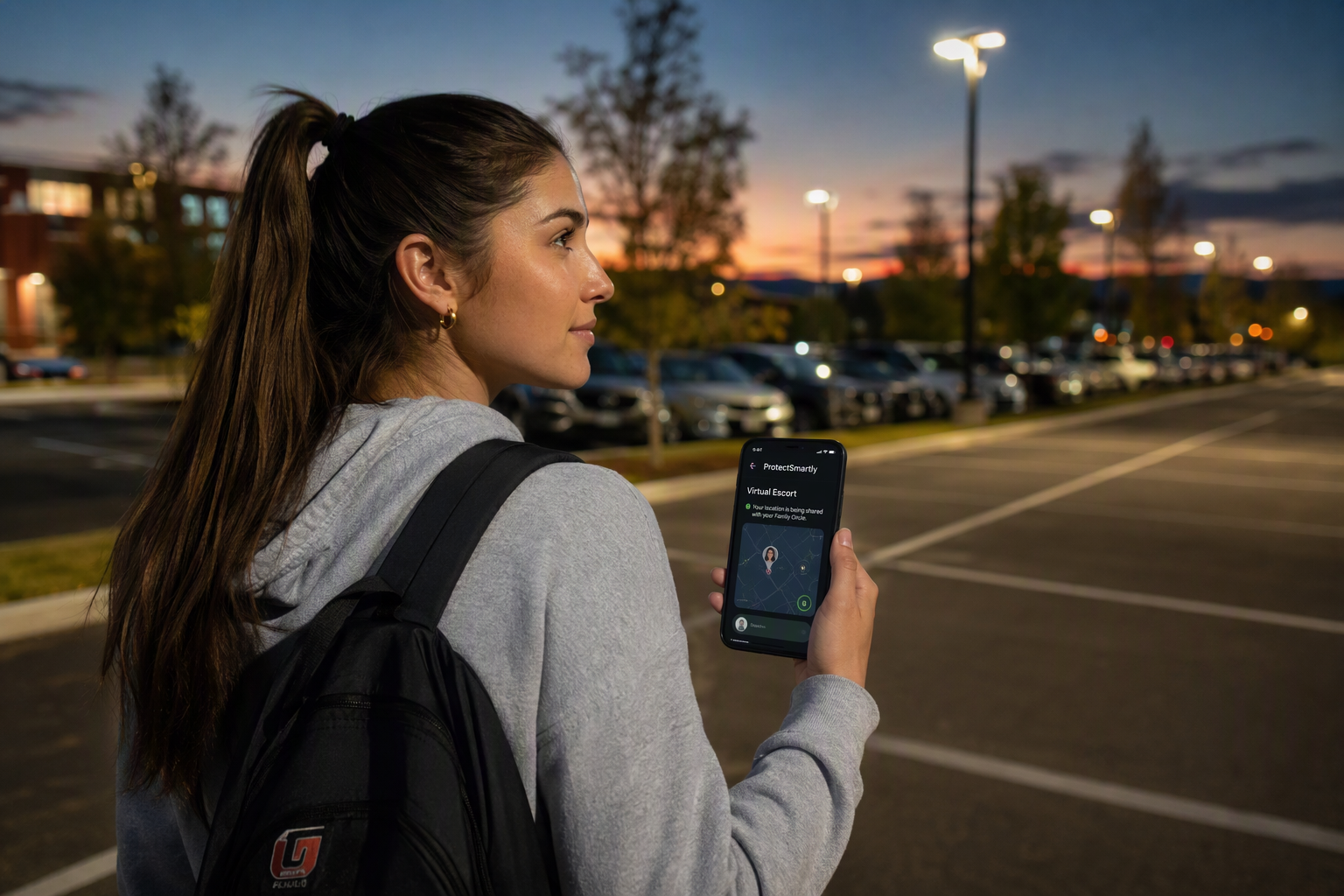
One of the most effective ways to stay safe is to ensure you are never truly walking alone. Using a secure student safety app allows you to connect with a “Family Circle” or a trusted roommate during your walk.
- Real-Time Progress: Your circle can monitor your exact GPS coordinates from the moment you leave the library until you reach your car.
- Automated Arrival Pings: Set a “Safe Zone” around your vehicle’s usual parking area. Your circle is notified the moment you arrive, providing immediate peace of mind.
2. The One-Tap SOS for Campus Commuters
In a high-stress situation—such as being followed or witnessing suspicious activity—you need a way to call for help without fumbling with your phone’s lock screen. A dedicated SOS alert app like ProtectSmartly provides a discrete, one-tap emergency SOS. A single press alerts your entire circle and shares your live location, allowing for rapid intervention.
2026 Campus Parking Safety Checklist
- Plan Your Route: Walk the route during the day to identify the best-lit paths and security tower locations.
- Keys in Hand: Have your keys ready before you leave the building. This reduces the time spent searching at your car door.
- Avoid Distractions: Put away your headphones and phone. Awareness is your first line of defense.
- Check the Back Seat: Before entering your vehicle, quickly scan the interior, especially the rear floorboards.
- Utilize a Safety App: Ensure every member of your household has a reliable family safety app installed and configured.
FAQ: Campus & Parking Safety
Q: Are multi-story garages safer than open-air lots?
A: Not necessarily. While garages often have more cameras, they also have more blind spots, concrete pillars, and enclosed stairwells. Vigilance is required in both environments.
Q: What if I see someone suspicious near my car?
A: Do not approach. Return to a safe, populated building immediately and use your SOS alert app to notify security or your trusted circle.
Q: How does ProtectSmartly handle campus privacy?
A: ProtectSmartly prioritizes user control. You choose when and with whom you share your location. We recommend sharing only during active commutes in high-risk areas.
Conclusion: Awareness is Your Best Shield
The return to campus in 2026 should be a time of excitement, not anxiety. By understanding the new data surrounding parking lot risks and utilizing proactive technology like ProtectSmartly, students and faculty can take control of their personal safety.
Don’t let your commute be a matter of chance. Start building your safety net today by connecting with your Family Circle.
Learn more about how ProtectSmartly protects students on campus.
Explore our Student Safety App features for late-night commutes.
Download ProtectSmartly and take a proactive approach to your campus safety.