Campus Safety Update 2026: Navigating New Security Data and Off-Campus Risks
As the first weeks of the 2026–2027 academic year unfold this August, a series of high-profile incidents near university campuses has put the spotlight back on student security. From reports of shootings near the University of Cincinnati to major security overhauls at the University of Houston, the message for families is clear: safety doesn’t end at the campus gates.
In late August 2026, educational institutions are increasingly adopting “layered” security models, but the most critical layer remains the individual personal safety net that students and families build for themselves.
The 2026 Campus Reality: High-Tech Security and Off-Campus Vulnerabilities
While universities have invested millions in computer vision, drone technology, and cloud-based sensors to intercept active incidents, the areas surrounding campuses remain a challenge. Recent data from the 2026 Annual Campus Security and Fire Safety Reports indicates that while on-campus crime is being mitigated by tech, the “perimeter risks” in residential and commercial areas nearby are rising.
Why “Layered Security” is the New Standard
- Integrated Computer Vision: Many campuses are now using AI-enabled cameras that can identify suspicious behavior or unauthorized vehicles in real-time.
- Drone Response Teams: As seen in recent security briefings, campuses are testing non-lethal drones to provide eyes-on-the-ground during active shooter reports or large-scale disturbances.
- Text-to-Device Alerts: The speed of information is the biggest factor in survival. Modern students are now opting into one-year Hawk Alert-style text systems that bridge the gap between campus police and the student body.
Empowering Students in the Transition Zones
The most dangerous time for a student is often the “transition window”—walking from a late-night study session to an off-campus apartment or a peripheral parking lot.
1. The Power of a Digital Escort
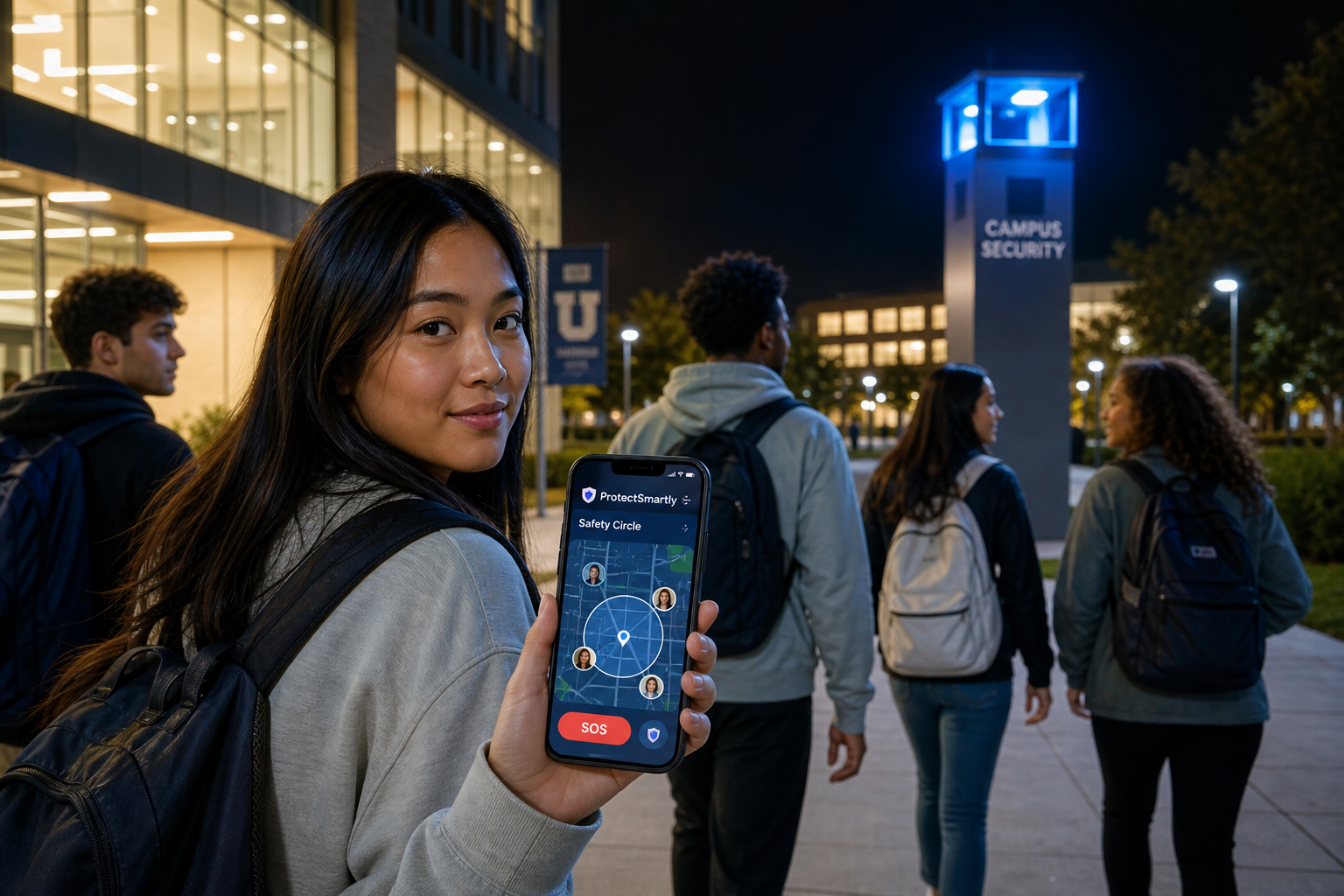
Instead of relying solely on “Blue Light” towers, which are stationary, students are moving toward mobile safety nets. Using a student safety app like ProtectSmartly allows for a “Virtual Escort.”
* Family Circle Monitoring: A student can share their live location with a trusted roommate or parent during their walk home.
* Safe Zone Geofencing: Set up automated alerts for when a student leaves a safe campus building or arrives at their off-campus housing.
2. Rapid Response with the One-Tap SOS
When an incident occurs near campus—such as the recent disturbances reported in late August 2026—every second counts. A dedicated SOS alert app provides a discrete, one-tap emergency SOS that immediately notifies a student’s entire Family Circle and shares their exact GPS coordinates. This ensures that help is mobilized even before official campus alerts are dispatched.
2026 Campus Safety Checklist for Families
- [ ] Review the Clery Act Data: Download your university’s 2026 Security Report to understand the specific risks in your area.
- [ ] Update Alert Preferences: Ensure your student has opted into all local and campus-specific emergency text systems.
- [ ] Test Your Safety Net: Conduct a “check-in drill” this weekend to ensure your family safety app is working correctly on all devices.
- [ ] Audit Off-Campus Routes: Walk the most common off-campus routes during the day to identify well-lit paths and safe harbors like 24-hour businesses.
FAQ: Campus Security in 2026
Q: Are off-campus apartments less safe than dorms?
A: They lack the university’s internal security infrastructure. However, by using a private safety network like ProtectSmartly, students can bring that level of security with them wherever they live.
Q: What should I do if I hear of an incident near campus?
A: Do not head toward the area. Use your safety app to verify your location with your circle and stay indoors until an “all clear” is issued by local authorities.
Q: Can a safety app replace campus police?
A: No. It is a communication tool that ensures campus police and your family are notified faster and with more accuracy during a crisis.
Conclusion: Connection is the Foundation of Security
As we move into September, the safety of our students depends on more than just institutional policy; it depends on connectivity. By understanding the latest campus security trends and utilizing the power of a private, tech-enabled safety net like ProtectSmartly, families can ensure that their students remain secure, both on and off campus.
Don’t wait for the next alert. Start building your campus safety net today.
Learn more about how ProtectSmartly supports student safety.
Explore the Student Safety App features for campus life.
Download ProtectSmartly and take a proactive approach to your student’s safety now.