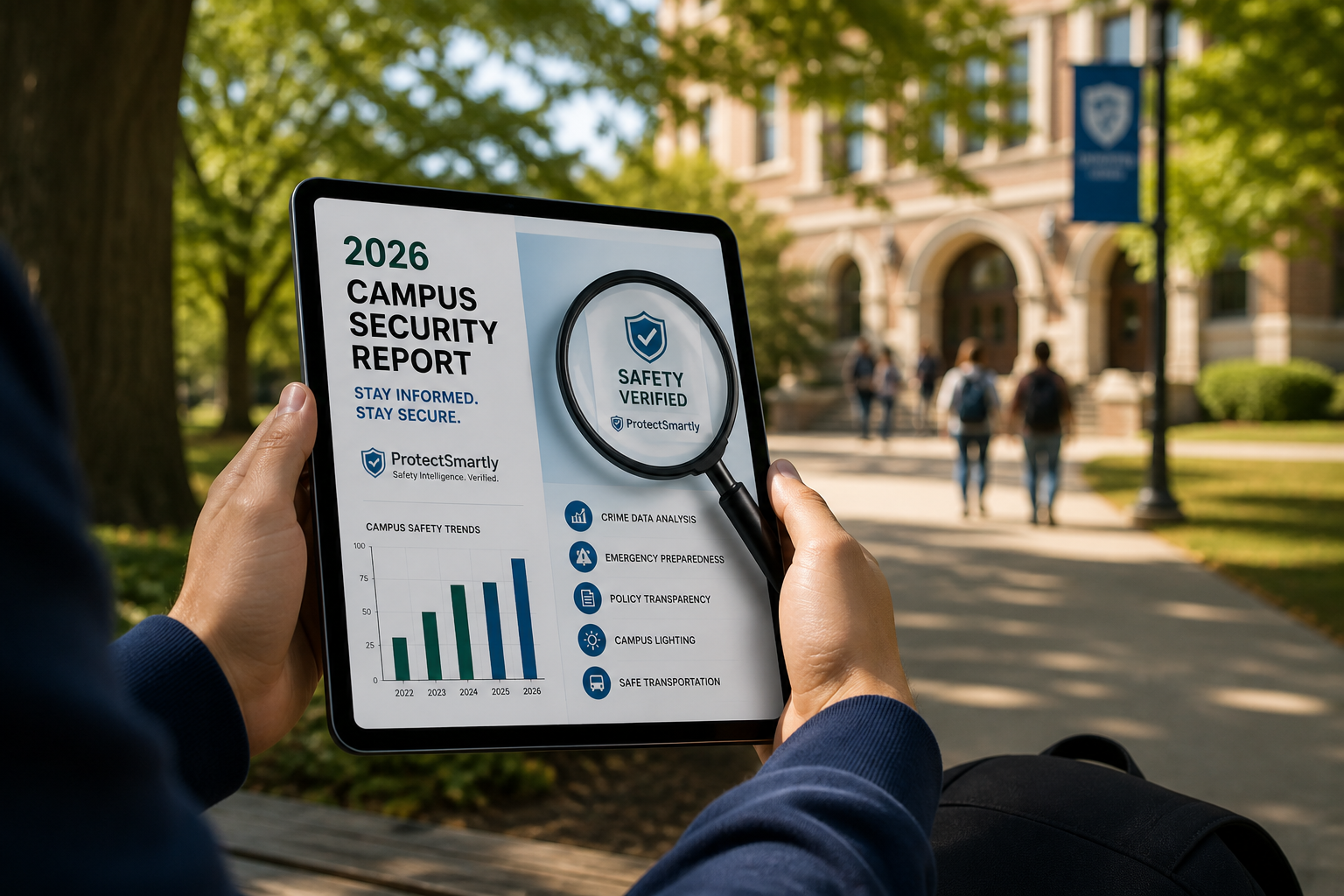
In late August 2026, a critical set of documents is being released by universities across the country: the Annual Campus Security and Fire Safety Reports. Required by the federal Jeanne Clery Disclosure of Campus Security Policy and Campus Crime Statistics Act, these reports provide families with an essential look at the safety landscape of their student’s educational home.
As the 2026-2027 academic year commences, understanding how to interpret these statistics—and more importantly, how to act on them—is a vital component of proactive personal safety.
The 2026 Clery Act Reports: Beyond the Numbers
While the statistics on theft, burglary, and alcohol-related incidents are important, modern families in 2026 are looking deeper into the policy and response sections of these reports. The data from mid-August 2026 indicates that while physical crime rates on many campuses remain stable, the focus has shifted toward behavioral threat assessment and rapid communication systems.
What to Look For in a 2026 Security Report
- Rapid Communication Protocols: Does the university have a redundant, multi-channel alert system? In 2026, relying only on email or sirens is insufficient.
- Threat Assessment Teams: Look for information on the school’s behavioral intervention programs. How do they identify and support students in crisis before a safety incident occurs?
- Integrated Fire Safety: Modern reports in 2026 now emphasize integrated digital monitoring for dorm fire safety, ensuring that alerts are sent directly to student devices.
Bridging the Gap: Empowering Students with Technology
Even the most comprehensive university security plan has “white space”—the transition periods and individual movements where a student is most vulnerable.
1. The Power of Personal Connectivity
A campus security report is a baseline, but individual safety is built through connectivity. Using a secure student safety app allows a student to maintain their independence while staying connected to their private “Family Circle.”
- Digital Escort for Late-Night Study: If a student is walking back to their dorm after dark, their circle can monitor their real-time progress.
- Safe Zone Geofencing: Set up automated check-ins for high-traffic campus locations. Your circle is notified when the student arrives safely at the library, gym, or residence hall.
2. The One-Tap SOS for Rapid Response
In an emergency, the delay between an incident and the arrival of campus security can be critical. A dedicated SOS alert app like ProtectSmartly provides a one-tap emergency SOS that bypasses complex dialing or navigation.
- Instant Location Sharing: One tap alerts the Family Circle and shares the student’s precise GPS coordinates, allowing for immediate coordination with local authorities or campus police.
- Privacy-First Design: In 2026, privacy is paramount. ProtectSmartly ensures that location data is encrypted and visible only to the people the student chooses.
2026 Campus Safety Checklist for Families
- [ ] Read the Annual Security Report: Download and review the 2026 report for your student’s university.
- [ ] Identify Emergency Phone Numbers: Save the campus police and local emergency numbers in your student’s phone.
- [ ] Establish a Communication Schedule: Agree on a daily or weekly “digital check-in” routine.
- ] Audit Personal Gear: Ensure your student has a portable power bank and a reliable [family safety app installed.
- [ ] Practice Situational Awareness: Discuss the importance of being aware of surroundings, especially during transitional periods like walking through campus parking lots.
FAQ: Campus Security & Reporting
Q: Are the statistics in the Clery Act report always accurate?
A: They represent reported crimes. It is often useful to compare several years of reports to identify trends rather than focusing on a single year’s data.
Q: How do I know if my campus is safe?
A: Safety is a layered concept. A safe campus has not just low crime statistics, but also a proactive security culture, strong mental health support, and transparent communication.
Q: Can a safety app really help in a large campus environment?
A: Yes. Because they provide real-time GPS data, apps like ProtectSmartly allow for much faster and more accurate assistance than traditional “Blue Light” towers or phone calls.
Conclusion: Awareness is the Best Preparation
The release of the 2026 Annual Campus Security Reports is a reminder that safety is a shared responsibility. By understanding the institutional landscape and utilizing the power of a private, tech-enabled safety net like ProtectSmartly, students and families can start the new school year with confidence.
Don’t wait for a crisis to build your net. Start your proactive campus safety journey today.
Learn more about how ProtectSmartly supports student safety.
Explore the SOS Alert App features for campus life.
Download ProtectSmartly and take a proactive approach to your student’s safety now.